
9.06.2026 · 4 min read
Author: The AURONN® expert team
Antioxidants in cosmetics. An effectiveness ranking based on data
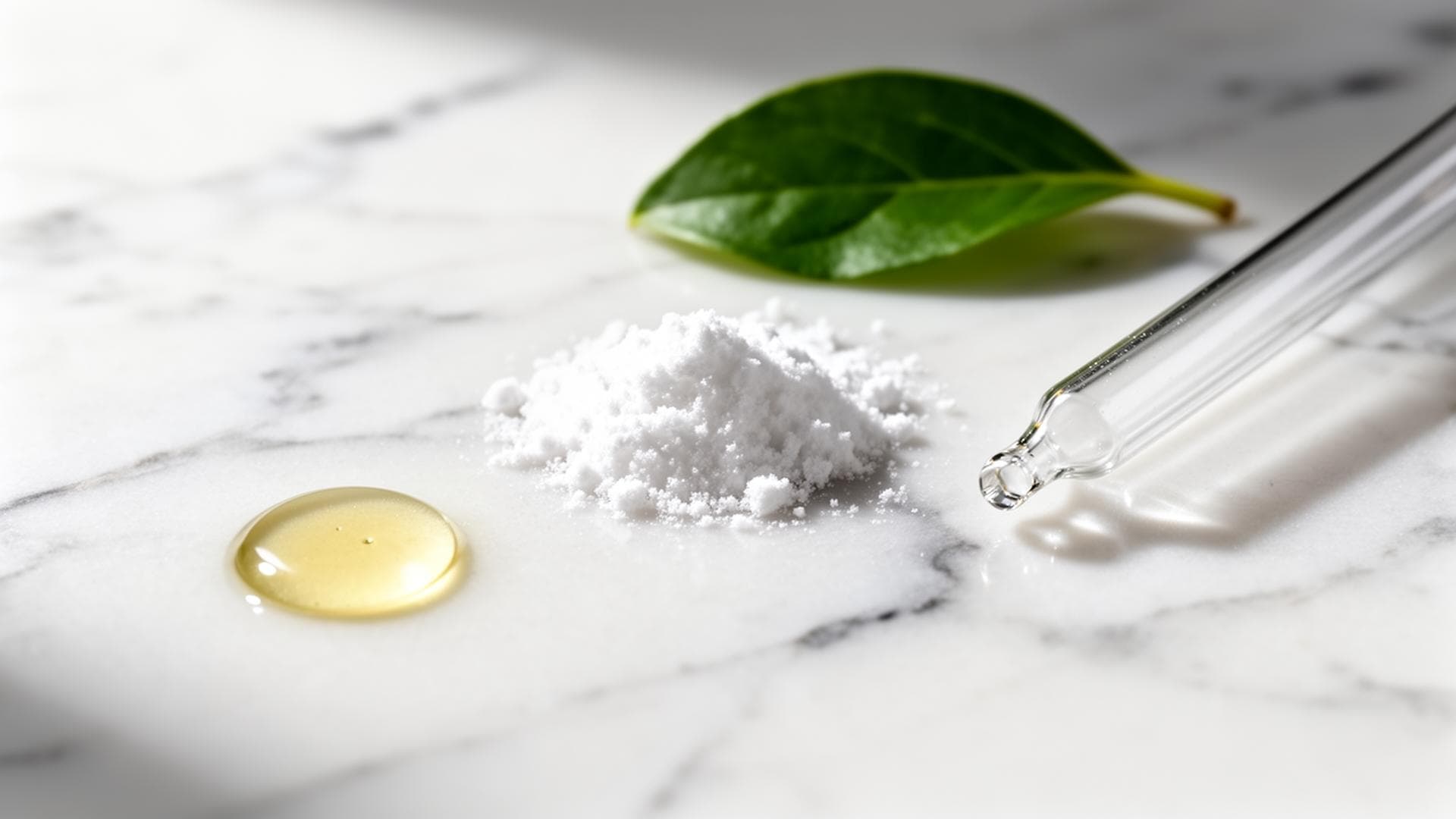
“Antioxidant” is one of the most frequently used words in cosmetics — and one of the least precise. Under the shared label hide molecules with completely different mechanisms and effectiveness.
The classics: vitamins C and E
Vitamin C brightens, supports collagen synthesis and neutralises radicals — but it is unstable and used up in a single reaction. Vitamin E protects cell membrane lipids, yet works similarly: one molecule, one reaction. Both ingredients remain valuable, but their antioxidant capacity is limited.
The supporters: Q10, resveratrol, niacinamide
Coenzyme Q10 and resveratrol complement antioxidant protection and work well in ageing prevention. Niacinamide acts more broadly — it strengthens the barrier, regulates and evens the tone — which is why it more often plays the role of a partner to antioxidants than a standalone shield.
Fullerenes: a different league
A fullerene is not used up in a single reaction — its carbon cage deactivates up to 34 radicals at once and keeps working. In comparisons of antioxidant activity, biological fullerenes achieve results up to 172× higher than vitamin C and up to 240× higher than vitamin E.
The conclusion? Well-composed care does not choose “either–or”: classic antioxidants still have their tasks, but it is worth basing the foundation of antioxidant protection on the molecule with the greatest capacity — biological fullerenes.